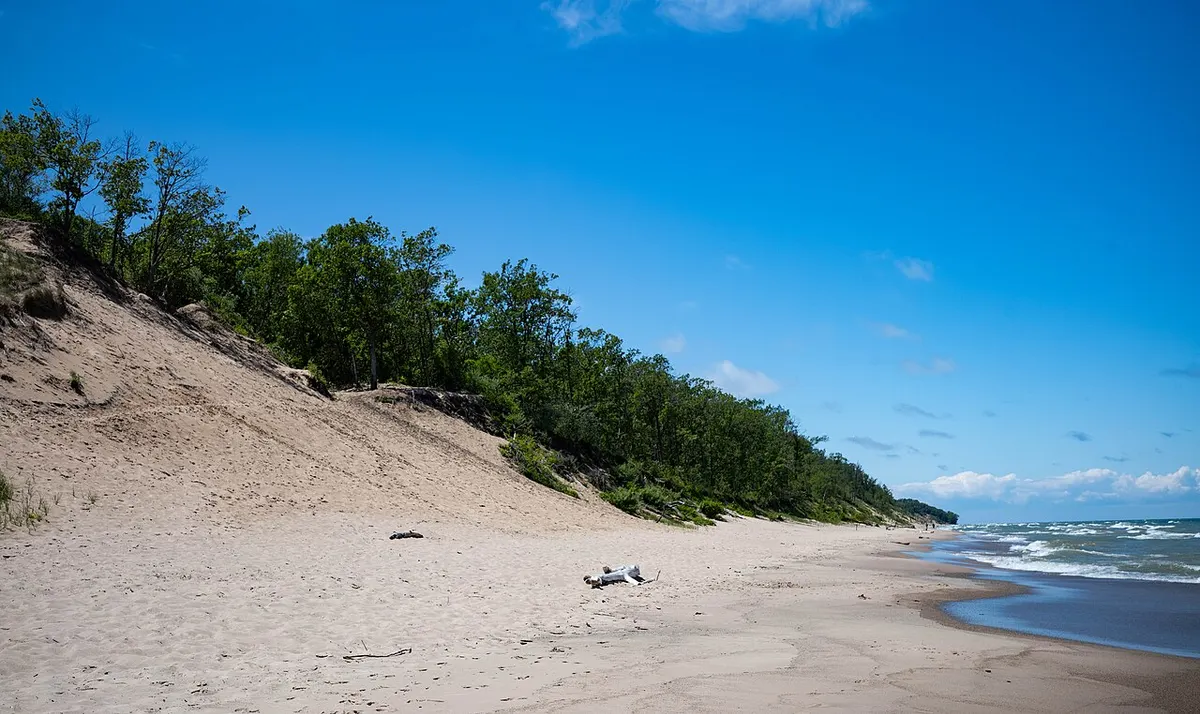
One shoreline, two separate parks
Indiana Dunes State Park and Indiana Dunes National Park share a stretch of Lake Michigan. They do not share an entrance pass. That small detail can change the price, route, and pace of your day.
The state park is the simpler choice for a beach-centered visit. You can spend the day in one place, with sand, trails, and a nature center close at hand. The national park spreads your choices across a much wider area. It rewards a plan that names a beach or trail before you leave.
For a first visit, I would choose the state park if the main goal is to relax by the water. I would choose the national park for a day built around hiking and different habitats. Neither is the wrong choice. They solve different problems.
Indiana Dunes State Park vs National Park at a glance
| State park | National park |
|---|---|
| Best for a beach day with a clear home base. | Best for several trail, beach, or history stops. |
| One main park at the north end of State Road 49. | Separate sites spread along the southern shore of Lake Michigan. |
| Daily car entry: $7 with Indiana plates; $20 with out-of-state plates. | Private family vehicle pass: $25 for seven days. |
| State passes apply. Federal passes do not. | Eligible federal passes apply. State passes do not. |
| The 3 Dune Challenge and a central swimming beach. | West Beach, Cowles Bog, Miller Woods, and other distinct stops. |
Those are standard entry prices listed for October 2026, not camping or event charges. Check any pass conditions that apply to your group before paying.
Fees: do not pay for the wrong park
The state park's car fee depends on the vehicle's license plates. The Department of Natural Resources’ current Indiana DNR fee list sets Indiana Dunes State Park at $7 for Indiana plates and $20 for out-of-state plates. The lower out-of-state price quoted in some older guides is out of date.
The national park's pass page lists a $25 private-vehicle pass good for seven days. The vehicle pass covers the people riding in that family-sized vehicle. Different rules apply to people arriving on foot, motorcycles, and larger groups.
A federal pass does not get you into the state park. A state park pass does not cover the national park. If you visit both, allow for both fees unless you qualify for a specific exemption.
For an Indiana driver taking one short beach trip, the state park has a clear price edge. For an out-of-state visitor planning several days of national park stops, the seven-day pass may fit better. Choose by your actual route, not the name on the sign.
The state park makes a beach day easier to plan
Indiana Dunes State Park covers 2,182 acres and more than three miles of Lake Michigan shoreline. It has a nature center, a swimming area, trails, and a campground. You do not need to drive between widely separated park units to fill a day.
That is the appeal for a group with mixed energy levels. Some can stay near the beach while others choose a hike. The state park's 1.5-mile Trail 8 is rugged and crosses its three highest dunes. Soft sand makes a short distance feel longer, so it is not the easy choice just because the mileage looks small.
The drawback is that a compact plan can also draw a crowd. A busy summer beach day calls for an early start and a backup plan. “There is parking” and “there will be parking when I arrive” are not the same promise.
The national park gives you more kinds of day
Indiana Dunes National Park offers a wider range of landscapes and separate places to visit. Its hiking guide is useful because a lake view, a woodland walk, and a wetland route are different outings. Pick the setting you want before choosing the trail.
Cowles Bog, Miller Woods, and the Great Marsh give you reasons to look beyond the swimming beach. Do not try to collect every stop in one day. Time spent finding the next parking lot can eat into the time you meant to spend outside.
The old name, Indiana Dunes National Lakeshore, still appears in books and older accounts. It refers to the park's earlier designation, not a third park you need to add to your map.
The national park is my choice for a repeat visitor. You can give one part of the dunes area a full morning, then choose a different part next time. Its spread is a drawback for a rushed visit and an advantage for a longer stay.
West Beach is a useful middle ground
Want a national park beach with more facilities? West Beach is worth a look. The National Park Service lists restrooms, drinking water, picnic shelters, and a bathhouse. The beach is roughly 0.3 to 0.5 miles from the parking area along a paved access route.
That walk is worth planning for if you carry chairs, a cooler, and children's gear. A large parking lot does not mean you step straight from the car onto the sand. Pack so the walk is part of the day, not its first test.
For anyone with limited mobility, review the exact route and current access information. “Accessible facilities” does not tell you whether every section of beach will suit your needs. Ask park staff about the route from the space where you will park.
Mount Baldy is not an open dune climb
Mount Baldy sits near Michigan City at the national park's eastern end. The beach access site reopened in 2026, but the dune face and summit remain restricted. The summit is not a self-guided hike.
Follow the marked beach route and current signs. Only join a summit visit when the park offers an authorized ranger-led program. Old photos of people climbing the dune are not permission to do the same today.
If Michigan City is your base, see our seven local stops for an art or museum visit to pair with the lake. That is often a better full day than trying to cross the whole national park.
Hiking trails: choose the ground, not just the distance
Sand dunes change the effort of a walk. A mile over loose sand can take much more work than a mile on a firm path. Read the trail rating, look at the route, and leave time for the return climb.
At Indiana Dunes State Park, Trail 7 gives you a 1.1-mile route from the nature center toward the beach. Trail 2 is a longer, easy-rated three-mile walk through woods. These are different choices from the rugged dune climb. You can enjoy the state park without making its steepest trail the goal.
Indiana Dunes National Park has 15 trail systems and more than 50 miles of hiking trails. Cowles Bog Trail is 4.7 miles and rated moderate to rugged. It crosses several habitats, so it suits a day when the walk itself is the main event. The Miller Woods trail, formally the Paul H. Douglas Trail, is a moderate 3.4 miles. Both ask for more time than a quick stop at the shore.
Great Marsh and shorter walks
Great Marsh has an easy 1.3-mile trail plus a separate paved route to a viewing deck. That distinction matters: the paved access does not make the entire trail paved. Heron Rookery Trail follows the Little Calumet River for an easy-rated 3.3-mile outing. Neither needs to be added to a beach day just because it is on the map.
These hiking trails make the national park appealing beyond summer swimming. Choose one that fits your group. For a short first visit, a single good walk is more useful than a long list of trailheads.
Visitor centers and environmental education
The Indiana Dunes Visitor Center is a good place to settle questions about a national park site before driving there. Ask a park ranger about closures, parking availability, and the exact trail surface. The answer can save a wasted drive or a walk that does not suit your group.
The Paul H. Douglas Center for Environmental Education is another national park stop for information and trail maps. Keep it distinct from the state park's nature center. A map search for “visitor center” can send you somewhere other than the entrance you meant to use.
For Indiana Dunes State Park, start with the Department of Natural Resources' park information and nature-center schedule. For Indiana Dunes National Park, use National Park Service information. Saving the right map before leaving is a small step with a useful payoff.
Parking, picnic shelters, and a workable backup
Parking availability should shape the plan, especially when your day depends on one swimming beach. Pick a main stop and a backup before you leave home. Check the backup's entrance fee too. Moving from the state park to a national park beach is not a free transfer between parking lots.
West Beach has picnic shelters as well as its bathhouse and beach route. If your group needs a picnic table, shade, or a shorter walk from accessible parking, check those details for the specific site. Facilities vary across Indiana Dunes National Park.
For a trip that starts near the West Beach area, keep the rest of the day nearby. For a trip based in Michigan City, focus on the eastern side. Nearby communities can fill a lunch break, but crossing the region several times makes a simple outing harder than it needs to be.
Let the weather change the plan
A calm-looking lake is not a promise of safe swimming. Read posted warnings and follow closures. Lifeguard schedules and swimming hours can change with weather and staffing, so do not assume coverage just because it is summer.
In hot weather, sand and exposed trails can feel much harder than shaded paths. Carry water, use sun protection, and choose a route that fits the least experienced person in the group. In cool weather, a shore walk can still be worthwhile without a swim.
The lake also gives you a good reason to keep one indoor idea in reserve. A library audiobook is another easy companion for the drive home. Our Hoopla and Libby comparison explains how to borrow one before you leave.
Two realistic first-visit plans
For one unhurried beach day
Choose Indiana Dunes State Park. Start with a short walk while your group has energy, then settle near the swimming area when conditions allow. Leave the toughest sand climb out if it would make the rest of the day a chore.
Keep the plan small. A beach visit, lunch, and a nature-center stop can be plenty. There is no prize for turning a day by Lake Michigan into a checklist.
For trails and a change of scene
Choose Indiana Dunes National Park. Pick one main hiking area and one beach stop. Check the route between them and save the map before you set out. Add a third stop only if the day still has room.
The Indiana Dunes Visitor Center is a useful starting point when you are unsure about conditions. Ask about the trail you intend to use, not just whether the park is open. One closed route need not rule out the whole visit.
Which park should you choose?
For a first beach day, choose the state park. Its tighter layout makes the day easier to understand and easier to keep relaxed.
For varied hiking, habitat, and return visits, choose the national park. Allow more planning time and choose specific stops. In the Indiana Dunes State Park vs National Park decision, the best guide is the kind of day you want to have.
Questions before you go
Can I visit both parks in one day?
Yes, but plan for separate entry fees and travel between stops. One park is often enough for a first visit.
Are both parks in the same time zone?
The dunes area uses Central Time. This matters if you are driving from a part of Indiana that uses Eastern Time. Check the time shown on any booked activity.
Can I bring a dog to the state park beach?
No. Indiana DNR does not allow dogs on the Indiana Dunes State Park beach. Check current pet rules for any other route before taking your dog.
Can I camp at either park?
Both parks have camping, but separate booking systems and site features. Reserve the exact campground you mean to use. A reservation in one park does not put you inside the other.